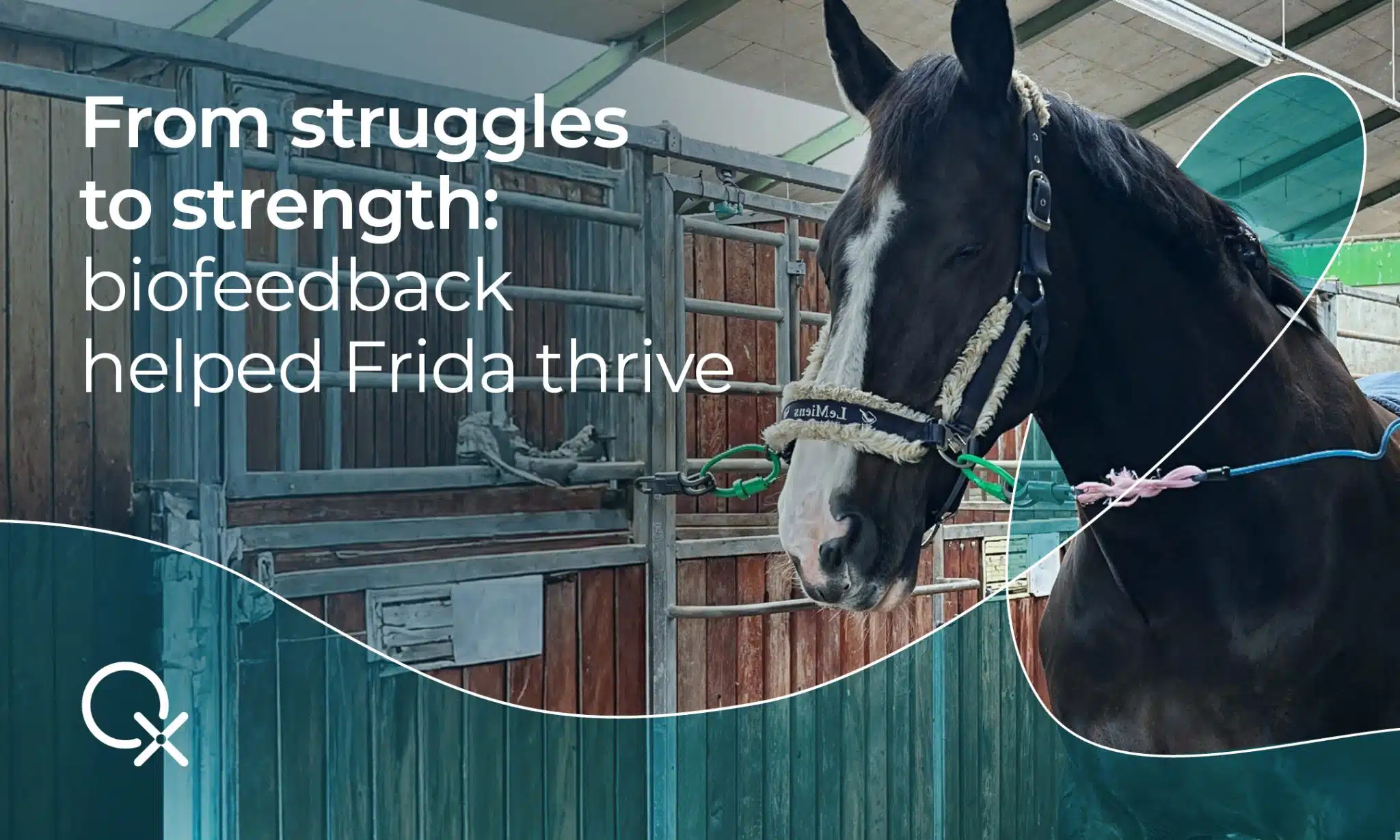
When Dr. Eiwa Marquart received her QUEX ED device equipped with the NOAH program for animals in August 2024, she had high expectations. Little did she know that it would become a turning point for Frida, a 15-year-old Danish Warmblood mare with a history of health challenges.
A Grand Prix Mare
Frida isn’t just any horse—she’s a former Grand Prix dressage competitor. When she came into her current owner’s care, she was dealing with a variety of health problems, including degenerative spine conditions, PPID (Cushing’s disease), stomach ulcers, lameness, and dental issues.
Dr. Marquart shared, “I had previously treated Frida with acupuncture, craniosacral therapy (CST), and chiropractic care. While we made some progress, it was often slow and short-lived.”
Setback
By September, Eiwa decided to incorporate biofeedback into Frida’s treatment to address her increasing fatigue and reluctance to exercise. She and Frida’s owner planned for 3 to 5 sessions, hopeful that this new approach would offer the boost Frida needed.
However, before they could finish the initial sessions, a veterinary intervention caused a setback. “Frida was given intravenous Tildren injections for her joints, which caused severe side effects like colic, diarrhea, and increased anxiety,” Eiwa explained. “Her already fragile condition worsened, and we were back at square one.”
A Fresh Start
Despite this setback, Eiwa utilized the NOAH program to address the multiple facets of Frida’s health, including her metabolism, endocrine system, digestion, joint inflammation, and emotional well-being. Sessions revealed subtle but consistent improvements. “Initially, Frida’s energy levels reflected her struggles, but with each session, her digestion and joint health gradually improved,” Eiwa shared.
Dr. Marquart and Frida’s owner also explored how the owner’s stress might have been affecting Frida. “The owner committed to staying calm and positive, creating a supportive environment that I believe made a significant difference in Frida’s recovery,” Eiwa noted.
A Turning Point
By early November, Frida had made remarkable progress. “She was calmer, more confident, and moving more fluidly. Her owner was thrilled, saying she hadn’t seen Frida this comfortable in years.”
A few weeks later, Frida’s transformation was clear. “Her energy had returned, and so had the graceful movements that once defined her career. Even her stablemates seemed to notice—Frida looked and behaved like her younger self,” said Eiwa.
An Early Christmas Present
By mid-December, Frida was thriving. Eiwa reflected, “It felt like an early Christmas gift—a reminder of why I do this work. I truly believe this case highlights how holistic care can make a meaningful impact on both humans and animals. The NOAH program helped me uncover and address imbalances that traditional treatments missed. Seeing Frida’s transformation reaffirmed my faith in holistic care, which I’m confident will benefit many more horses in the future.”
“Healing is rarely a straight line. It’s experiences like this that prove to me that even the most complicated cases can improve with time, patience, and a comprehensive approach,” Dr. Marquart concluded.
About Dr. Eiwa Marquart
Dr. Eiwa Marquart is a veterinarian specializing in alternative medicine for horses, focusing on biomechanics. With certifications in chiropractic, acupuncture, and additional training in craniosacral therapy and osteopathy, she combines her veterinary expertise with holistic approaches to enhance the well-being of animals.